
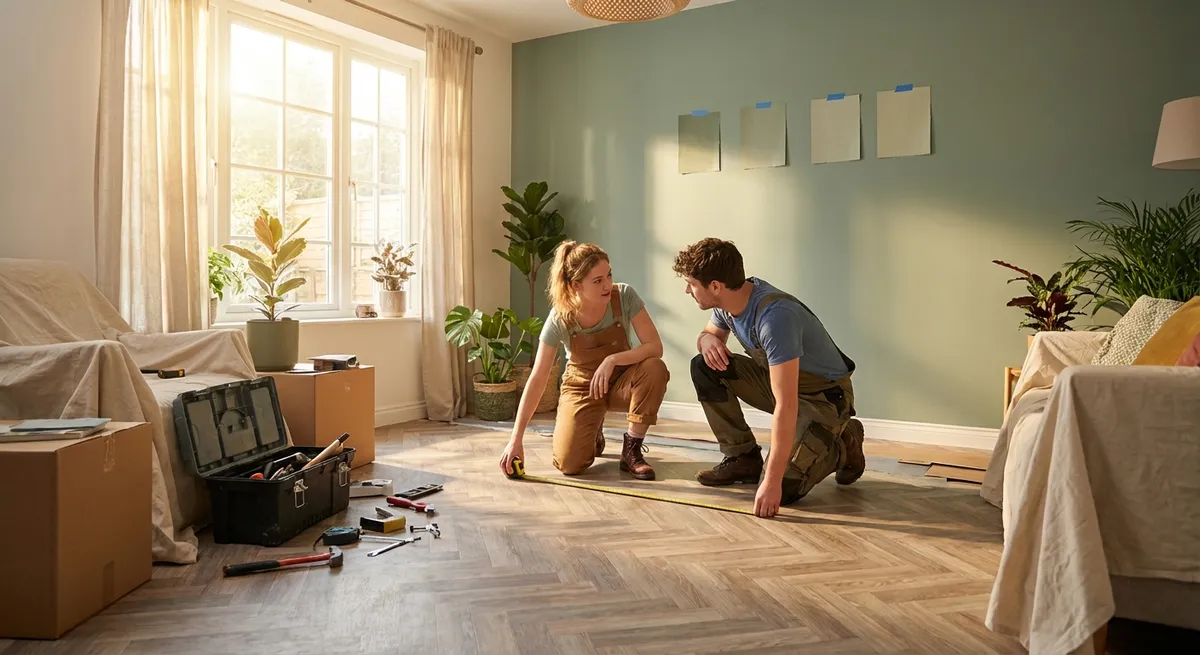
Is your place full of “I’ll fix that someday” projects? This is your sign to start. You don’t need a workshop, a truckload of tools, or a contractor on speed dial—just a simple plan, a free afternoon here and there, and a willingness to learn as you go. This roadmap breaks home improvement into realistic, bite‑size projects you can finish and feel good about.
Below are five practical, DIY‑friendly upgrades that make your home work better and feel better, without requiring pro‑level skills.
Step 1: Start Where You Stand – A Simple Entryway Reset
Your entry sets the tone for your whole home. If it’s a drop zone for shoes, bags, and mail, spending 20 minutes finding your keys becomes normal. Let’s fix that with a simple, DIY‑friendly reset.
Focus on three things: a place to hang, a place to drop, and a place to sit.
How to do it:
Hang:
- Install 3–5 heavy‑duty wall hooks or a slim coat rack. - Use a stud finder or drywall anchors rated for at least 20–30 lbs. - Standard height: roughly 66–70 inches from the floor, lower if kids will use them.
Drop:
- Add a small shelf, narrow console, or wall‑mounted ledge for keys, mail, and sunglasses. - Secure it with proper anchors; even small shelves can pull out if overloaded. - Use a small tray or bowl to corral loose items—this alone cuts entry clutter in half.
Sit:
- Use a small bench, sturdy ottoman, or even a DIY plywood box with a cushion on top. - Make sure it’s stable: no wobble, no flex. Tighten screws or add corner brackets if needed. - Slide baskets or crates underneath for shoes or bags.
DIY tip: Lay out everything on the floor first to test spacing. Once it feels right, mark the wall lightly with painter’s tape as your drilling guide.
Step 2: Swap in Smarter Lighting (Without Rewiring the House)
Lighting is one of the fastest ways to change how a room looks and feels. If your place is full of dim bulbs and sad ceiling fixtures, a few basic upgrades can make it brighter, safer, and more energy‑efficient.
What to focus on:
Upgrade your bulbs:
- Swap old incandescent or CFL bulbs for warm‑white LEDs (2700K–3000K) in living areas. - Use “daylight” LEDs (4000K–5000K) in work zones like kitchens, garages, and offices. - Check the lumens (brightness), not just wattage—aim for 800–1100 lumens for most rooms.
Fix dark corners:
- Add plug‑in floor or table lamps where overhead lights don’t reach. - Use clamp‑on lamps for workbenches, craft tables, or desks—no wiring needed. - For hallways and closets, peel‑and‑stick battery‑powered LEDs are a quick win.
Improve fixture function:
- If you’re comfortable, replace outdated ceiling fixtures with modern, flush‑mount LED fixtures. - Always turn off power at the breaker, not just the switch, before touching any wiring. - Match wire colors (black to black/hot, white to white/neutral, green/bare to ground) and use wire nuts correctly tightened.
Add simple control:
- Install plug‑in smart plugs for lamps so you can set schedules or timers from your phone. - Use slide or rotary dimmers rated for LEDs to avoid flicker (check “LED compatible” on the label).
DIY tip: Take a picture of old wiring before disconnecting anything. If you need to backtrack, that photo will save you.
Step 3: Tame the Kitchen Chaos with Functional Storage Tweaks
You don’t need a full renovation to make your kitchen easier to cook in. A few strategic storage tweaks can solve the “why is everything buried in the back?” problem and make the space more enjoyable to use.
Practical DIY upgrades:
Install slide‑out organizers:
- Pick one problem cabinet (usually pots/pans or cleaning supplies). - Measure inside width, depth, and height—twice. Buy slide‑out baskets or organizers sized to fit. - Mount the rails to the cabinet floor using the screws provided; pre‑drill pilot holes to avoid splitting.
Add vertical storage:
- Use tension rods or slim dividers in cabinets to stand up cutting boards, baking sheets, and trays. - Mount a magnetic knife strip on the wall or backsplash studs (away from kids’ reach). - Install a simple rail with hooks for utensils, cups, or small pans.
Claim the inside of doors:
- Screw or adhesive‑mount small racks inside pantry and cabinet doors for spices, wraps, and foils. - Do a “door swing test” first to make sure nothing hits shelves or frames.
Create a real prep zone:
- Clear one counter section and commit it as your main prep area. - Keep only knives, cutting boards, and most‑used utensils there. Everything else gets a new home. - Use a small bin or compost container on the counter while you chop to keep mess contained.
DIY tip: Work one cabinet or drawer at a time. Don’t empty the whole kitchen at once—you’ll burn out before you finish, and dinner still needs to happen.
Step 4: Fix Drafts and Creaks for a Quieter, More Comfortable Home
Some of the most effective home improvements aren’t visible—but you feel them. Stopping drafts, rattles, and squeaks makes your home more comfortable and can shave a bit off your utility bills.
Easy, low‑risk fixes:
Seal around doors and windows:
- Close a piece of paper in an exterior door. If it slides out easily, your weatherstripping is weak. - Replace worn weatherstripping on door frames with adhesive foam or rubber. - Use caulk or caulk strips around window trim where you see gaps or cracks (interior side: paintable latex; exterior: exterior‑rated caulk).
Quiet squeaky floors:
- For wood floors, sprinkle talc‑free powder (or powdered graphite) between boards and sweep in—often enough for mild squeaks. - For squeaks over a basement or crawlspace, have someone walk above while you locate the squeak from below, then screw the subfloor to the joists with wood screws.
Stop cabinet and door slams:
- Add small stick‑on bumpers to cabinet doors and drawers to soften impact. - Install soft‑close hinges or dampers if you’re comfortable swapping hardware.
Check and adjust door latches:
- If a door won’t latch or rubs, tighten hinge screws first (often they’ve just loosened). - If it still sticks, lightly sand the sticking edge or adjust the strike plate by loosening and shifting it.
DIY tip: Keep a small “house tune‑up” kit handy: assorted weatherstripping, a few tubes of caulk, felt pads, bumpers, and common screws. When you notice an issue, fix it on the spot.
Step 5: Build a Simple, Safe DIY Habit (So Projects Actually Get Done)
Tools and materials matter—but habits are what keep projects moving and keep you safe. Instead of trying to become a pro overnight, build a repeatable system you use every time you tackle a home project.
Make these habits standard:
Plan on paper first:
- Write down the goal, the steps, and the tools/materials you think you’ll need. - Sketch a quick layout or measurement diagram; label everything. - This prevents the classic “three hardware store trips in one day” problem.
Always do a 2‑minute safety check:
- Safety glasses and hearing protection for anything loud or dusty. - Dust mask/respirator if sanding, cutting, or using strong chemicals. - Closed‑toe shoes, no dangling jewelry, tie back long hair.
Measure, mark, then walk away for 30 seconds:
- After measuring and marking a cut or drill hole, step back and look again. - Ask: Is anything behind this wall? (Use a stud finder and be aware of plumbing/electrical zones.) - Re‑measure before actually cutting or drilling—this catches a lot of mistakes.
Clean as you go:
- Keep a trash bag and a small box for off‑cuts and hardware. - Sweep or vacuum between stages so you aren’t working in dust or tripping over scraps. - Put tools back in the same spot every time—future you will be grateful.
Document your projects:
- Take before/after photos, plus shots of anything hidden (like stud locations or wiring paths) before you close walls or add panels. - Keep a simple home notebook or digital folder with dates, paint colors, product manuals, and receipts.
DIY tip: Start with projects that don’t involve plumbing or major wiring until you’re more confident. There’s no shame in calling a pro for gas lines, main electrical panels, or structural changes.
Conclusion
You don’t need a full remodel to feel like your home works better. Small, targeted projects—an organized entry, smarter lighting, more functional storage, fewer drafts, and better DIY habits—stack up fast.
Pick one step from this roadmap and finish it completely before starting the next. The momentum you get from a single done‑and‑dusted project is worth more than five half‑finished ones. Over time, your home will feel more intentional, more comfortable, and more “you”—and you’ll have the skills and confidence to tackle bigger projects when you’re ready.
Sources
- U.S. Department of Energy – Energy Saver: Weatherstripping - Guidance on sealing doors and windows to reduce drafts and save energy
- ENERGY STAR – Lighting Choices to Save You Money - Explains LED bulb types, brightness (lumens), and color temperature
- Consumer Product Safety Commission – Home Maintenance Safety Tips - General safety guidance for DIY work around the home
- Family Handyman – How to Fix Squeaky Floors - Practical methods for locating and repairing common floor squeaks
- University of Missouri Extension – Kitchen Planning & Design - Principles of functional kitchen layouts and storage organization