
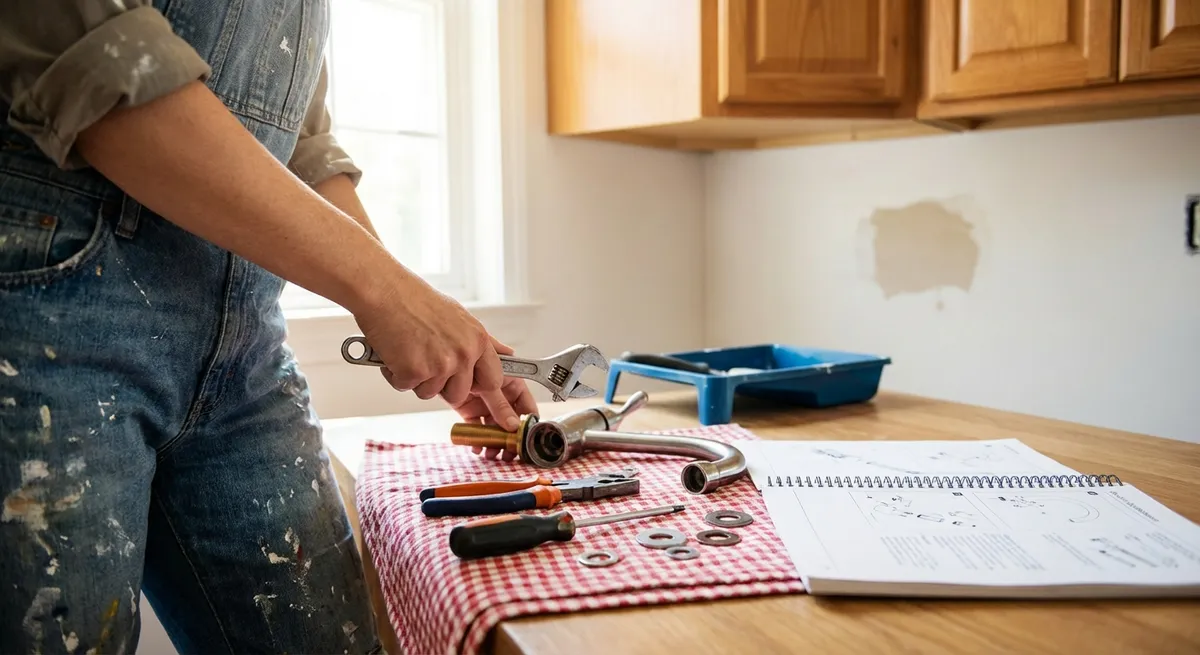
When something breaks at home, it’s tempting to reach for your phone and book a pro right away. But a surprising number of “uh-oh” moments—drippy faucets, sticky doors, mystery wall cracks—are totally DIY-friendly with a bit of guidance and a calm approach. This guide walks you through five practical home repair projects that build real skills, not just quick patches. Each one is beginner-friendly, uses basic tools, and can be finished in an evening or a weekend.
Start With a Simple Win: Silencing a Dripping Faucet
A dripping faucet wastes water, money, and your patience. The good news: for most standard faucets, the fix is usually a worn-out washer, cartridge, or O‑ring.
- Shut off the water under the sink (two small valves—turn them clockwise). Open the faucet to release pressure.
- Plug the drain with a stopper or rag so you don’t lose tiny screws or parts.
- Disassemble the handle: usually there’s a small cap hiding a screw. Remove it, then pull off the handle and any trim pieces.
- Inspect the guts: for compression faucets, you’ll find a rubber washer at the end of a stem; for cartridge faucets, you’ll see a single cartridge you can pull out. Look for cracks, worn edges, or mineral buildup.
- Take the old parts to the store to match exact replacements—brand and size matter. Reassemble in the reverse order, turn water back on slowly, and test for leaks.
DIY tip: Take clear photos as you disassemble. If you forget how things went together, your photo roll is your best friend.
Stop Drafts at the Source: Re-Sealing Leaky Windows and Doors
If your house feels chilly in winter or hot around windows in summer, air is sneaking in. Fixing this isn’t just about comfort—it can cut your energy bill and reduce wear on your heating and cooling systems.
- Check for drafts on a breezy day by slowly moving a lit stick of incense or a thin strip of toilet paper around window and door frames—movement means air leakage.
- Replace worn weatherstripping on doors: gently pull off the old strip, clean the surface, measure the frame, then stick or nail on new weatherstripping. Ensure the door still closes easily.
- Caulk window gaps between trim and wall: use indoor paintable caulk, cut the nozzle at a 45° angle, and apply a smooth bead along the gap. Tool it with a damp finger or caulk tool for a clean finish.
- Add a door sweep at the bottom of exterior doors so you can’t see daylight underneath. Screw it in place while the door is closed to set the right height.
- Re-check with the incense strip once everything’s dry. If the smoke stays still, you’ve done it right.
DIY tip: Stick with latex (water-based) caulk indoors—it’s easier to work with and clean up, and you can paint it after it cures.
Make Walls Look New Again: Fixing Nail Holes and Small Cracks
Holes from old picture hooks and small stress cracks make a room feel tired fast. Patching them is one of the easiest upgrades you can do with a putty knife and a bit of patience.
- Clean the area: remove loose paint, dust, or flaking drywall with a dry cloth or a light scrape with a putty knife.
- Fill tiny nail holes with lightweight spackle using the putty knife. Press it in and scrape flat so it’s flush with the wall. For hairline cracks, open them slightly with the knife so the filler can grab.
- For larger holes (up to a few inches) use a self-adhesive wall patch. Stick it over the hole, then skim-coat with joint compound, feathering the edges beyond the patch.
- Sand lightly once the filler is fully dry—use fine-grit sandpaper, and blend the edges into the surrounding wall. Wear a dust mask and vacuum up the dust.
- Prime and paint: spot-prime patches so they don’t flash through the paint. Use leftover wall paint or get a color match at the paint store.
DIY tip: Work in thin layers instead of creating one big hump of filler. Thin layers dry faster and are much easier to sand smooth.
Make Doors Behave: Fixing Sticky, Squeaky, and Misaligned Hinges
Doors that squeak or rub against the frame are everyday annoyances you don’t have to live with. Often, the hinge is the culprit—and that’s something you can fix with a screwdriver and a few minutes.
- Deal with squeaks first: apply a few drops of lubricant (dry lube or silicone spray is better than oil that collects dust) to the hinge pin and moving parts. Open and close the door a few times to work it in.
- Tighten hinge screws: loose screws let doors sag and stick. Use the correct-size screwdriver and snug each screw, especially the top hinge.
- Fix stripped screw holes by pulling the screw, pushing in wood toothpicks dipped in wood glue until snug, trimming them flush, and then driving the screw back in. This gives the screw fresh wood to bite into.
- Check alignment: If the door rubs along the top or latch side, slightly tighten or loosen hinges to adjust the gap. Mark where it’s rubbing with a pencil to guide your adjustments.
- For stubborn rubbing edges, lightly sand the door’s edge where it contacts the frame, then seal any exposed wood with paint or finish to prevent moisture problems.
DIY tip: Always support the door with a wedge or stack of shims if you’re removing multiple hinge pins or doing more than a quick tighten.
Upgrade Without Remodeling: Swapping Old Outlets and Light Switch Plates
You don’t need to rewire your house to make it feel more modern. Simply replacing old, yellowed outlets and switch plates—with standard or USB-equipped ones—can make a room feel cleaner and more functional. This involves safe, basic electrical work.
- Turn off power at the breaker panel to the room you’re working on. Test the outlet or switch with a plug-in tester or lamp to confirm it’s dead before you touch any wires.
- Remove the cover plate with a screwdriver, then unscrew the outlet or switch from the electrical box and gently pull it forward.
- Take a picture of the existing wiring before disconnecting anything. Label wires with tape if needed (especially for 3‑way switches).
- Transfer wires one at a time from the old device to the new one, matching terminal colors (brass for hot, silver for neutral, green for ground). Tighten screws firmly; avoid using “backstab” push-in connectors where possible.
- Re-seat and secure the device in the box, install the new cover plate, then restore power at the breaker. Test with a lamp or outlet tester to confirm correct wiring.
DIY tip: If the wiring looks brittle, damaged, or confusing—or if the box is overstuffed—stop and call a licensed electrician. Knowing when not to DIY is part of being handy.
Conclusion
Building DIY home repair skills doesn’t require a workshop full of pro tools—just curiosity, patience, and a willingness to start small. Each project you complete teaches you something you can reuse on the next repair: how to shut off utilities, how to take things apart and put them back together, and how to spot early signs of trouble before they turn into expensive emergencies. Pick one of these fixes, gather your tools, and give yourself permission to learn as you go. Your future, more confident DIY self will thank you.
Sources
- U.S. Department of Energy – Air Sealing Your Home - Guidance on finding and sealing drafts around windows and doors
- EPA WaterSense – Fix a Leak - Information on common household leaks and how fixing them saves water and money
- Consumer Product Safety Commission – Electrical Receptacles Safety - Safety basics for working with electrical outlets and preventing hazards
- Family Handyman – How to Fix Drywall - Step-by-step visuals for patching nail holes and larger wall damage
- This Old House – How to Fix a Squeaky Door - Practical tips and additional methods for silencing and adjusting doors