
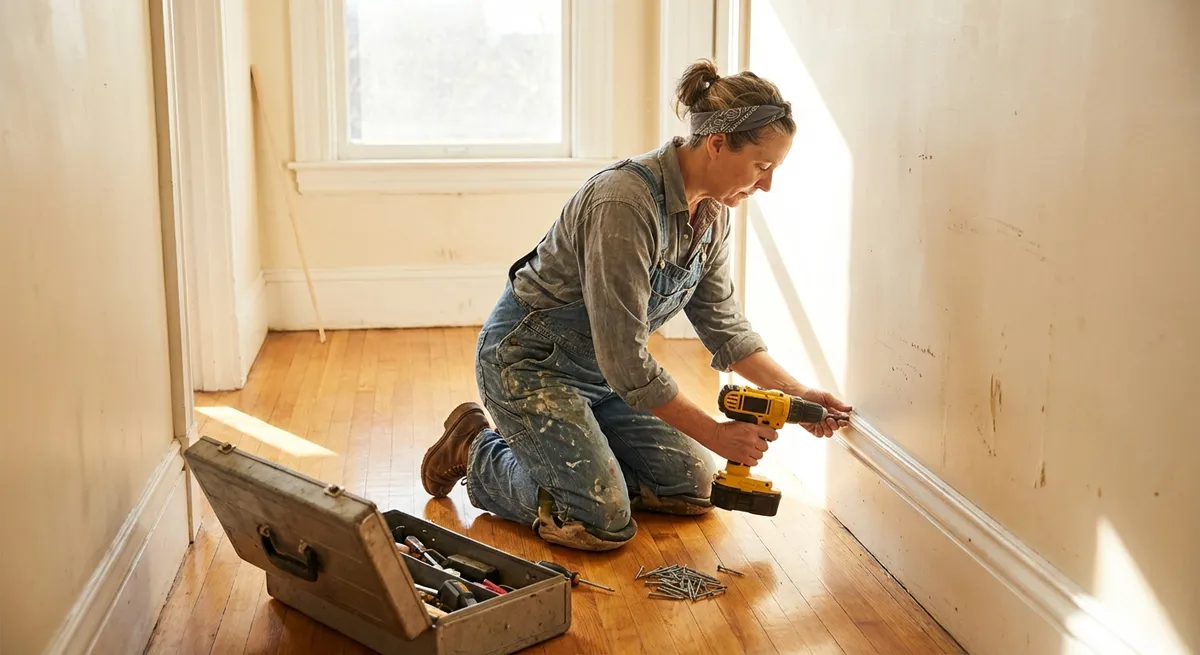
If you only touch tools when something is already broken, you’re paying the “panic tax” on home repairs. A better move: tackle small fixes before they turn into big, budget-busting problems. You don’t need a workshop or pro skills—just a few basic tools, a free weekend, and a willingness to get your hands slightly dirty. This guide walks through five practical DIY-friendly repairs that protect your home, boost comfort, and build your confidence one project at a time.
Step 1: Stop Drafts at the Doors and Windows
Air leaks are silent money drains. If your doors and windows leak air, your heating and cooling system has to work harder—meaning higher bills and more wear on your equipment.
Start with a “draft hunt.” On a windy day, close all doors and windows and slowly move your hand around the edges. Feel cold (or hot) air? That’s your target. You can also use a lit stick of incense or a candle; if the smoke flickers, you’ve got a leak.
For doors, check and replace worn weatherstripping. Most modern weatherstripping comes in peel-and-stick rolls—measure your door frame, cut to length, clean the surface, and press it into place. For gaps under doors, install or adjust a door sweep; many are simple screw-on metal strips with a rubber or nylon edge that you can trim and level.
For windows, use caulk to seal small cracks where the frame meets the wall. Use paintable acrylic-latex caulk for trim you might paint later. Cut the caulk tube tip at a 45-degree angle, run a steady bead along the crack, then smooth it with a damp finger or tool. If your windows are older and especially drafty, temporary shrink-film window insulation kits can make a big difference in winter with nothing more than double-sided tape and a hair dryer.
Step 2: Quiet and Protect Leaky or “Sweating” Plumbing
Water problems in a home rarely stay small. A tiny drip or a sweating cold-water pipe can lead to mold, rot, or damaged finishes if you ignore it.
Start under sinks. Place a dry paper towel around each trap (the U-shaped pipe) and at the connections. If you see damp spots after running the water, the slip nuts may just need tightening. Use adjustable pliers to gently snug them—don’t overtighten or you’ll crack plastic fittings. If the leak persists, turn off the water, loosen the joint, and replace the old washer or the entire P-trap kit (they’re inexpensive and designed to be DIY-installed).
For visible supply-line drips at shutoff valves or where flexible hoses connect to faucets or toilets, try carefully tightening the compression nut or hose connector. If that fails, shut off the water at the main or at the fixture valve, replace the flex line, and turn water back on slowly to check for leaks.
If your cold-water pipes “sweat” (condensation forming and dripping), especially in humid weather, insulate them. Foam pipe insulation sleeves are cheap and pre-slit; open them, wrap them around the pipe, and tape or clip them closed. This stops drips that can quietly soak cabinets, drywall, or basement framing over time and also improves efficiency for hot-water lines.
Step 3: Refresh Old Caulk in the Bathroom Before Water Sneaks In
The caulk around tubs, showers, and sinks isn’t just cosmetic—it’s a water barrier. When it cracks, separates, or grows mold, moisture can slip behind tile or into walls, leading to soft spots, stains, and in worst cases, structural repairs.
Inspect your tub and shower seams closely—look where tile meets tub, in inside corners, and around fixtures. If you see gaps, dark stains under the caulk, or sections pulling away, it’s time for a redo.
First, remove the old caulk. Use a plastic or caulk removal tool to avoid scratching the tub. Softening gels can help with stubborn silicone. Scrape until only clean, solid surfaces remain, then scrub with a mildew remover or a mix of bleach and water (ensure good ventilation) and let everything dry thoroughly—ideally overnight.
Use a bathroom-specific, mold-resistant caulk—usually 100% silicone or a high-quality siliconized acrylic labeled for tubs and showers. Tape off the area with painter’s tape for a clean line. Cut the tip small, apply a continuous bead, and smooth with a damp finger or caulking tool, wiping away excess. Pull the tape while the caulk is still wet for crisp edges. Check the label for cure time and avoid using the shower until it’s fully set.
Step 4: Fix a Wobbly or Noisy Floorboard Before It Gets Worse
Loose floorboards and squeaks are more than annoying—they can signal fasteners working loose or boards rubbing, which only worsens with traffic. Catch it early and you can stabilize the area with simple tools.
For wood floors over a basement or crawlspace, see if you can access the underside. Have someone walk on the squeaky spot while you listen below. Often, the problem is a gap between the subfloor and joist. You can add short wood shims and construction adhesive from below or drive special screws up through the subfloor (not the finish floor) to pull everything tight.
If you can’t reach from below (for example, in a finished ceiling), use flooring screws from above in hidden or less-visible areas. For hardwood, aim to sink screws where they’ll be covered by trim or under rugs. For carpeted floors, specialty DIY kits let you screw through the carpet into the subfloor and then snap off the screw head below the surface so the carpet hides it.
For obviously loose individual boards on wood floors, pre-drill a small pilot hole at an angle and use trim screws to reattach the board to the subfloor or joist. Countersink the screw slightly and fill the hole with wood filler that matches your finish. The key is to fasten to the structural layer below, not just “into” the board itself.
Step 5: Clean and Reset Your Kitchen and Bath Vent Fans
Ventilation fans quietly protect your home from moisture damage, odors, and even some pollutants—but only if they’re actually moving air. Dust-clogged, underpowered, or noisy fans do a poor job and shorten their own lifespan.
Turn off power to the fan at the breaker or switch. Remove the cover—most modern covers either pull down and release from metal spring clips or pop off with gentle pressure from a flat screwdriver. Vacuum or wipe the cover screen with a damp cloth and mild soap. Then use a vacuum with a brush attachment to remove dust from the fan blades, motor housing, and nearby duct opening.
While the cover is off, test the fan’s pull: hold a piece of toilet paper or a light tissue up to the fan when it’s running (with power restored temporarily and the grille off). It should hold the paper firmly. If suction is weak, your duct may be overly long, kinked, or clogged. Check the exterior vent hood; clear any lint, leaves, or bird nests, and make sure the flap can open freely.
If your fan is old and extremely noisy, consider replacing it with a modern, energy-efficient model. Many are sized to fit existing housings or only require slight adjustments. When shopping, check the cubic feet per minute (CFM) rating for proper room size and the sones rating for noise level (lower is quieter). A properly working fan helps prevent peeling paint, mildew on walls, and even warping trim in humid spaces.
Conclusion
Tackling home repairs doesn’t have to mean demolition dust and complicated tools. Simple, focused projects—sealing drafts, tightening up plumbing, renewing bathroom caulk, stabilizing floors, and cleaning vent fans—give you fast wins you can feel every day. They also train your eye to spot small problems before they become big ones.
Pick one project from this list for your next free afternoon. Lay out your tools, take your time, and document the before-and-after. That’s not just satisfying—it’s how you build your own “handy” skills, one fix at a time.
Sources
- [U.S. Department of Energy – Air Sealing Your Home](https://www.energy.gov/energysaver/air-sealing-your-home) - Explains where homes typically leak air and how to seal them effectively.
- [Environmental Protection Agency – Moisture Control Guidance](https://www.epa.gov/mold/moisture-control-guidance-building-design-construction-and-maintenance) - Covers how to prevent moisture problems that can lead to mold and structural damage.
- [Family Handyman – How to Caulk a Tub or Shower](https://www.familyhandyman.com/project/how-to-caulk-a-shower-or-bathtub/) - Step-by-step visual guide to removing and applying bathroom caulk.
- [This Old House – Silencing Squeaky Floors](https://www.thisoldhouse.com/flooring/21015021/silencing-squeaky-floors) - Detailed methods for finding and fixing squeaks from above and below.
- [Home Ventilating Institute – Bathroom Ventilation Guidelines](https://www.hvi.org/faq/bath-fans.cfm) - Provides guidance on fan sizing, performance, and maintenance for proper ventilation.